

History of DevOps
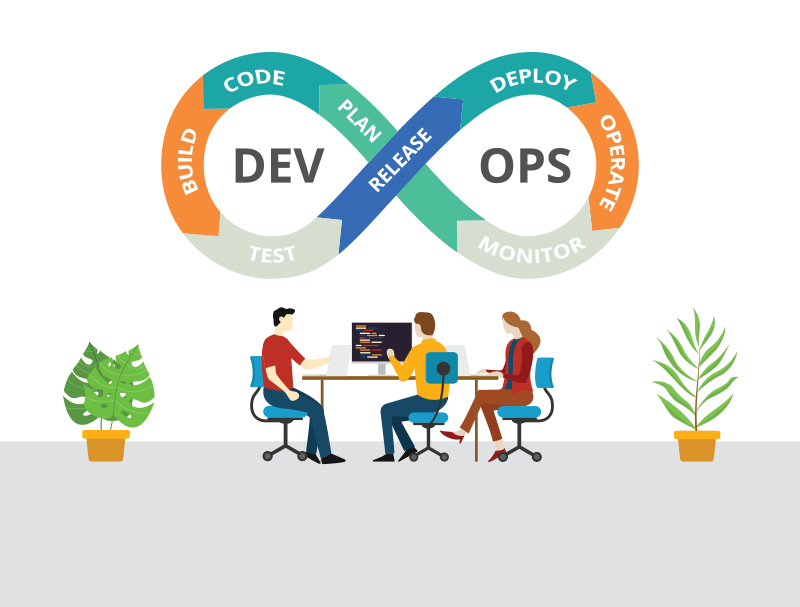
Despite the rise of agile methodology, development and operations teams remained siloed for years. DevOps is the next evolution of collaboration tools and practices to release better software, faster.
Bringing development and IT teams together
The DevOps movement started to coalesce sometime between 2007 and 2008 when IT operations and software development communities raised concerns about what they felt was a fatal level of dysfunction in the industry.
They railed against the traditional software development model, which called for those who write code to be organizationally and functionally apart from those who deploy and support that code.
Developers and IT/Ops professionals had separate (and often competing) objectives, separate department leadership, and separate key performance indicators by which they were judged, and often worked on separate floors or even separate buildings. The result was siloed teams concerned only with their fiefdoms, long hours, botched releases, and unhappy customers. Surely there’s a better way, they said. So, the two communities came together and started talking – with people like Patrick Debois, Gene Kim, and John Willis driving the conversation.
What began in online forums and local meet-ups is now a major theme in the software zeitgeist, which is probably what brought you here! You and your team are feeling the pain caused by siloed teams and broken lines of communication within your company.
Build a DevOps culture
Learn about the benefits of DevOps
You’re using agile methodologies for planning and development, but still struggling to get that code out the door without a bunch of drama. You’ve probably heard a few things about DevOps and the seemingly magical effect it can have on teams: Nearly all (99%) of DevOps teams are confident about the success of their code that goes into production, in a survey of 500 DevOps practitioners conducted by Atlassian¹.
However, DevOps isn’t magic, and transformations don’t happen overnight. The good news is that you don’t have to wait for upper management to roll out a large-scale initiative. By understanding the value of DevOps and making small, incremental changes, your team can embark on the DevOps journey right away.
Going beyond agile
DevOps touches every phase of the development and operations lifecycle. From planning and building to monitoring and iterating, DevOps brings together the skills, processes, and tools from every facet of an engineering and IT organization.
Agile methodologies help teams plan and produce by breaking work down into manageable tasks and milestones. Agile relies on sprints, backlogs, epics, and stories to assign work to skilled team members, adjust timelines when necessary, and deliver quality products and services to customers. Read more about agile.
Continuous integration and delivery: Continuous integration and delivery is a cornerstone of DevOps practices that relies on automating the merging and deployment of code. Traditional development methods require engineers to manually update changes in the codebase, with additional manual checks to ensure quality code is ready to ship into production. Deployments are scheduled with weeks- or months-long delays to remove the likelihood of bugs or incidents. DevOps practices remove these delays by automating the merging, testing, and deployment functions. High-performing teams use CI/CD to reduce their deployment frequency from every few months to multiple times each day. Read more about CI/CD.
Git repositories and workflows enable the automation and version control capabilities that are foundational to DevOps practices. Because Git is distributed, operations such as commit, blame, diff, merge, and log happen faster. Git also supports branching, merging, and rewriting repository history, which enables powerful workflows and tools. Read more about Git.
IT service management is the process IT teams use to manage the end-to-end delivery of IT services to customers. This includes all the processes and activities to design, create, deliver, and support IT services. The core concept of ITSM is the belief that IT should be delivered as a service, which goes beyond basic IT support. ITSM teams oversee all kinds of workplace technology, ranging from laptops, to servers, to business-critical software applications. Read more about ITSM.
Incident management teams respond to an unplanned event or service interruption and restore the service to its operational state. In a “you build it, you run it” model, developers partner with operations to reduce the likelihood of an incident occurring, and also reduce the mean time to recovery when an incident happens. Read more about incident management.
State of DevOps
Organizations and teams continue to adopt DevOps practices and tools. In a survey of 500 DevOps practitioners, Atlassian found that 50% of organizations say they’ve been practicing DevOps for more than three years.
Unfortunately, despite agreement on the definition of DevOps and the benefits of implementing DevOps practices, organizations and teams still struggle to fulfill the promise of DevOps. Teams must focus on continuous feedback, iteration, and improvement to deploy better and faster to meet customers' needs.
Top 7 DevOps Trends to Look Up in 2023
1. DevSecOps
With security being one of the most significant concerns in the digital age, enterprises have integrated the DevSecOps lifecycle to enhance it further. It has been used for streamlining governance and observability as well.
The main idea that DevSecOps stands for is the shift-left approach that security should follow instead of it being an afterthought. As per the latest DevSecOps trends, around 40% of Enterprises conduct the DAST test, 50% conduct the SAST test, and the rest scans dependencies and containers
One very stark example that we can consider is Pokemon Go. Although Pokemon Go is one of the major game-changing phenomena in the gaming industry, it began to show some liability problems upon its initial launch. With over 800 million downloads by minor users all over the world, they were responsible for the protection of their privacy as per the GDPR rules. However, there was a twist in the tale. Pokemon go partnered with Niantic for its development, with whom it shared responsibilities regarding security compliance and development. Therefore, although a percentage of childcare security compliance, as well as the backend operations, went to Pokemon go, the application as a whole was governed by Niantic.
With the significant amount of shared responsibility and third-party data, instilling collaboration and security culture became a predominant practice. This led to the company adopting DevSecOps integrated automation when it came to security checks instead of manual monitoring of application privacy from the very first stage. This is how the cultural paradigm of Pokemon go helped protect the privacy of billions of children.
2. Serverless Computing
Serverless computing is a way to develop and run services and applications without considering servers. These applications do not need the managing of servers because they are built that way from the very developmental stage of the app. Over the years, it has come to be a widely used innovative approach to software deployment. The serverless market is estimated to reach $30 billion by the year 2030. Additionally, more than 50% of Enterprises that have cloud-based courses have integrated serverless computing in their systems.
The DevOps process has greatly benefited from the serverless computing approach. With added operability, it has successfully bridged the gap between Development and Operations. It also helped generate the DevOps pipeline code without needing the host to develop, test, and deploy.
One stark example is Autodesk, a company that specializes in designing software for Architecture, Engineering, Construction, and Manufacturing. Autodesk has successfully streamlined faster development and facilitated quicker deployment by expanding its AWS footprints. One downside of using AWS is that it still needed a manual process that would take a minimum of two weeks to complete. With the growing number of accounts, it was difficult for Autodesk to sustain its optimum performance and work efficiency. This was when they decided to opt for AWS Dynamodb and AWS Lambda, which became an integral part of their serverless transformation. This significantly helped Autodesk to shorten the total time required for account creation from two whole weeks to a matter of ten minutes only.
3. Microservice Architecture
Microservice architecture often referred to as microservices, is currently being extensively used in the IT sector. Customized to accommodate the latest DevOps market trends, it has successfully broken down the age-old mammoth-sized applications into more manageable pieces that are smaller. Successfully simplified development testing as well as deployment in operations. It has also streamlined the consistent and frequent delivery of software and applications. It has been easier and simpler to facilitate the DevOps processes and principles to improve the Holistic quality of products.
A popular example would be Coca-Cola which has produced over 3800 products on a global scale. Essentially the company used a legacy-based architecture that connects every entity belonging to various continents. Supporting their ever-increasing growth, however, became a major challenge. This is where the IT teams of Coca-Cola decided to use a DevOps-based approach that involved the use of microservices. This is one of the new trends in DevOps that helps create a separate area for concerns and reusable modules that help enhance the agility as well as the speed of deploying the product. Therefore with microservice architecture, there was a significant reduction of data flow in the network, leading them to gain more time for scaling up to support more freestyle machines within a matter of minutes from weeks.
4. AIOps
MLOps and AIOps are two of the most renowned trending DevOps tools. They have been estimated to become a 40.91 billion dollar entity by the year 2026. Essential to optimize the DevOps operations to reap the benefits of high quality and quick release where MLOps and AIOps are important role-players. AIOps help automates IT processes and operations, whereas MLOps strengthens the development system of machine learning. Therefore, with AIOps, it is easy to identify the main cause of the problems that hamper operational productivity, and with MLOps, it is easy to optimize operations and enhance productivity.
This is one of the most widely used DevOps future trends, which has also been integrated into a platform named DRYiCE IntelliOps, developed by HCL. As a solution that addresses the full stack AIOps of the Enterprise as well as its observability requirements, it specializes in transforming the customers of HCL from reactive to proactive. They carried this out with the help of incident management and also by providing more visibility into the infrastructure. Moogsoft has supported this translation of customers into Agile business practitioners without HCL incurring additional costs of operations. This helped in the reduction of help desk tickets by 62%, MTTR by 33%, and also streamlined hassle-free cloud migration.
5. Low Code Applications
Many robust enterprises have adopted a low-code DevOps approach which has been quite beneficial for teams. The low-code approach enables agility that provides every organization with a huge competitive edge in the demanding and fast-paced software market. Low-code platforms help companies and enterprises build applications without any export coding knowledge. This helps non-technical professionals to also have a hand in developing software via a visual interface that entirely manages the app development process. It helps users develop their logic and workflow just by dragging and dropping elements. This is one of the renowned DevOps future trends that has helped speed up the process of development and deployment just by creating simplistic and user-friendly applications.
Many programming tools are tasked with automating the deployment applications by readily interfacing with low-code platforms. They have also significantly helped with crucial DevOps practices like version control, QA, and even build validation. Being one of the best 2020 DevOps trends, the single-platform approach of this trend that has provided a "no" or a "low" code has also significantly helped DevOps teams work more efficiently, reducing complexity as a whole. The very term 'low code' means having to give lesser emphasis on coding, whereas DevOps means efficient collaboration. Therefore, an amalgamation of the two is bound to enhance development and deployment.
6. GitOps
GitOps happens to be one of the best DevOps new trends that have been added to the DevOps workflow. It helps control, monitor, and automate infrastructure. Based on the Kubernetes paradigm, it has given IT operation managers and developers the ability to utilize Git for collecting and deploying several applications. GitOps takes all of the best DevOps practices, such as collaboration, version control Al, compliance, and CI/CD, into consideration and applies them to the infrastructure of automation. It additionally emphasizes increasing releases as well as consistent delivery to create, test, and deploy software fastly and with maximum efficiency.
One great example is the finance form called Mettle, powered by NatWest. It seeks to offer customers of small businesses applications that streamline payments by speeding them up and effectively managing their finances. Therefore ensuring that every service is consistently running 24/7 is imperative in their business infrastructure. In one instance, the engineering team of Mettle was challenged to find a solution where they could deploy the newest features at the fastest pace without compromising on the CI/CD pipeline security as well as reliability. To enable this, Mettle had to partner with Weaveworks to adopt the GITOps approach. It helped Mettle to develop a self-service program that enabled engineers to focus more on delivering value via innovation without any help from the platform team assistance. This helped increase production by 50% and deployment by 25%.
7. Kubernetes
Kubernetes, often abbreviated as K8, is an extensible and portable open-source platform that helps in managing containerized services and workloads. It provides a continuous and autonomous container-based ecosystem for integration, allowing developers to scale up or down on the resources. This is one of the prime reasons why it has become one of the top DevOps trends in 2023. Newly, 48% of developers have turned to Kubernetes for container integration. On top of all, Kubernetes helps facilitate cross-functional action and make sure that there is minimum deployment downtime to align with the standard and the best DevOps practices.
A great example of this is Nordstrom Inc., an American luxury departmental store that is headquartered in Seattle. As in the e-commerce industry, agility, speed, and a phenomenal customer experience were vital to that company's principles. Therefore they began using Kubernetes to incorporate a complete DevOps transformation, the deployment of pipelines, as well as the implementation of consistent integration. This helped them considerably reduce the time required for deployment from 3 months to a matter of 30 minutes, in addition to enhancing operational efficiency.
WHEN DID DEVOPS START? THE HISTORY AND ITS FUTURE
2023 and Beyond: The Future and Continuous Improvement of DevOps:
For 2023 and beyond, the future of DevOps lies in many technologies. Here are a few:
Cloud-Native solutions: Kubernetes, Serverless, and OpenShift will be used to manage applications in the cloud
AI/ML in DevOps framework: AI and ML will be used to automate certain processes and detect anomalies in feature development in applications
DevSecOps (Agile security): Business stakeholders are increasing their focus on security for compliance and customer satisfaction
Low-code application: Low-code development will be used to create and deploy applications quickly
What is a DevOps Tool?
DevOps Tool automates processes such as identifying and resolving bugs, increasing the speed of the monitor, overseeing update requirements, testing and helping in improving the overall quality of the developmental stages of the applications. It is easier to understand more about it, using Best DevOps Courses Online which educate users on all the benefits that these modifying tools bring. These devOps popular tools help in modification, communication, accountability, reliability, quality and stable responsibility among all the internal tiers of the applications.
Why Use DevOps Tools?
When you use any social media operations, applications or any managing space, you will expect it to generate outputs as fast as it is clicked on. However, lagging and buffering make the experience very underwhelming and not to mention, it costs a lot of time and energy. However, with the DevOps top tools you can have a better experience. For all engineers and tech mechanics, it is a savior.
How to Choose the DevOps Tools?
It is fitting to say that every problem desires a custom-made solution and not a generalized fix. Similarly, every domain, every application, and every software needs essential DevOps tools to correct technical mistakes and run the programs smoothly. You should focus on the automated criteria concerning your targeted problem-solving, such as automated testing, provisioning and building.
Best DevOps Tools and Technologies
1. Docker
It is an unlocked source medium where web builders can manage the framework of the software in the same easy way as managing the applications. It uses a technology known as ‘namespaces’ which allows the information to be segregated into containers. The builders can then easily manage these containers individually which allows the smooth function of the entire software as a whole. It requires a monthly subscription of $21 per user.
2. Prometheus
One of the popular tools for DevOps is Prometheus. This software is used to store instantaneous metrics, which helps in a time series format which makes it more efficient. It helps the constructors by alerting them of processing bugs and allows them to monitor and fix them immediately. It is a free software tool that was built at SoundCloud.
3. Chef
Most used devOps tools target the smooth functioning of the infrastructure processes. The Chef tool helps the IT developers and IT operations managers ensure that the applications and software are utilized in the IT infrastructures. It transforms the transcripts into codes which automates the problems of the server. It allows the applications to run with speedy delivery and helps collaborate with another DevOps. It is priced at $137 per node annually, and it can be used by multiple users.
4. Jenkins
Some of the best DevOps technologies are provided by Jenkins. The data is stored in Java scripts which helps on constant integration basis. It makes it efficient for engineers to build a server, solve its problems and track them immediately. The data is delivered in large numbers since it is quick to identify errors which makes problem-solving more efficient. It is also an unlocked source tool that integrates non-stop deliveries. It is an orchestration tool that runs CI programs known as pipelines. Since it is scripted in Java, it is easily accessible and usable on all platforms. It is a non-paid software DevOps tool.
5. Juju
This DevOps tool helps in running the best devOps software smoothly. It takes responsibility for all applications, integrations, etc. It uses the framework of ‘Charmed operators’ or ‘Charms’ to utilize the infrastructure of cloud space in applications and software. It is a free source of software integration. It helps the software to utilize the infrastructure in a wide scale of the cloud space.
6. Ganglia
One of the most important DevOps tools is Ganglia. Most of the information in the IT sphere is kept in transcripts and codes. However, it’s easier to comprehend data and analytics through graphical charts and displays. This tool helps keep track of a large cluster of data by analyzing it from the core. As the infrastructure grows, it is difficult to manage all the different tiers of management and production. That’s where Ganglia and its multi-benefits come into play. It is also an open-sourced, free-to-use tool.
7. Splunk
Managing a large amount of data is a difficult task. Each data must be stored in an organic space, which can be accessed whenever it is required. In today’s time, when hackers and web attackers try to invade the privacy and the internal systems of applications, tools like Splunk help in strengthening security and providing support. The people demand that every application must have quick action and there shouldn’t be any lagging. For this smoothness, one of the best devOps tools to learn is Splunk, which allows the engineers with all the information about the health of the running infrastructure, so that any problem could be solved at the right time. There are various modes of this tool. There is a free version that has limited access to its features and there are two paid versions that start at $2000 per year for an annual term license.
8. Supervisor
Many times, in various VPS systems, if engineers want to run small data programs, it is a difficult procedure due to the larger files. Or, targeting larger files means dealing with many smaller ones, which is not an easy task. This tool helps its user to manage and monitor long-running files by using one single interface that targets the specific file only. It can be used to control several UNIX operating systems. It works on Mac OS X, Linus, Intel, and Solaris. It is not supported under Windows.

9. Maven
To improve the management and the initial transcripts of the infrastructure, top devOps platforms are used. Maven, being one of the top devOps technologies, helps to optimize the project management system through the concept of a Project Object Model (POM). It is an open-source tool that can be operated in JAVA, Ruby, Scala, etc.
10. Consul
Consul, being one of the most common devOps tools, allows applications to run healthy and safe networking programs, where it ensures that the communication between services is verified and encrypted. It also helps in the traffic management of the applications. It starts at $0 with limited access and $0.27 per hour for a basic plan.
11. Datadog
This tool allows organizations to take faster actions in their management. It helps in close observation and monitoring whenever there is any change in plans or agendas. It helps to monitor real-time logs, metrics and other data. It charges $0.10 per GB work file.
12. Ansible
Another one of devOps most popular tools is Ansible allows managers to solve similar problems without going through them again and again. It automates the entire process, by providing repetitive solutions to repetitive problems and conserving both time and energy. It is an open-source tool that targets to increase productivity.
13. Vagrant
Vagrant is one of the popular tools for DevOps in this industry. Sometimes it is quite hard to manage the workflow of machines. It allows its users to build and manage the working environment using a singular workflow. It focuses solely on automation and is an open-free source tool.
14. Pagerduty
It helps with the server's feedback responses. It gives real-time reports which help in the reputation of the server. There are various plans to purchase Pagerduty. The lowest-priced plan costs $9 and the highest-priced plan costs $99.
15. Snort
This system analyses the threat to the server and immediately alarms the user. It acts as a threat-preventative measure, with features like a network intrusion prevention system (NIPS) and a network intrusion detection system (NIDS). It is free of cost tool.
16. Nagios
Nagios is one of the top DevOps tools used for monitoring purposes. It monitors the entire infrastructure that includes the system, servers, applications, networking protocols, etc. It is another open-source tool that is used by companies like Paypal, Airbnb, etc.
17. Rudder
It helps in ensuring that the system is always up to date and corrects any necessary fixes that the server needs, to make an optimized improvement. It is mostly dependent on small lightweight agents which help in dealing with large IT infrastructure files. It is also an open-sourced tool.
18. Artifactory
Most technology experts' resort to the Artifactory DevOps tool. It helps in the automation of binary and artifacts throughout the entire running of the system, until its execution. It is free of cost up to 2 GB of workload.
19. Graylog
The machine data need to be well organized and stored organically. It stores log data to optimize the management of IT processes. It provides real-time management solutions in terms of terabytes, which is a form of mechanical data. It is also one of the free and open-source tools.
20. Sumo logic
Storing data and comprehending it becomes a difficult task for many IT engineers. Most organizations use Sumo logic to understand the log data of the system. Various security analytics are decoded and simplified by using integrated analysis of threats. It helps in finding out the real-time threat configuration. It costs $24 for one person; however, for an entire e-commerce organization, it costs $79.
21. Capistrano
To run transcripts on multiple servers, this tool is used. It is originally written in Ruby language, but it can easily be transformed into other transcripts. It helps one application run on various web servers. It is also free of cost.

22. Monit
The basic function of Monit as its name suggests is ‘monitoring’ various directories, changes in checksums and timestamps. This tool is used for Linux and Unix, and it is also free.
23. Icinga
Having many tools to monitor can create a lot of chaos and data mishandling. This tool helps in managing a customized monitoring solution by sending data from the other DevOps tools and collecting them for analysis.
24. Code climate
One of the most popular DevOps tools is Code Climate. It is used to automate and back up all the client-server data that needs to be sent forward for evaluation. It allows its users to instantly resolve any matters of concern and keeps the progress tracked accurately.
25. Basis technologies
Most of the time, these DevOps don’t have the right platform to be operated on. Basis technologies act as one of the best DevOps platforms which saves a lot of time and energy for the users. It offers many learning programs to simplify each server stage and its progress.
26. UpGuard
The most requisite and compelling tool for cybersecurity is built-in UpGuard. It not only protects your most delicate data but also enables consumers to entrust it to a third party. UpGuard understands your attack surface; the methods for supervising assets are just as important as the configurations themselves. It also works with common automation platforms like Puppet, Chef, etc.
27. New relic apm
Application performance monitoring is a great tool for viewing the pathway of the consumer’s digital experience and an application’s performance. Full stack alerting is also supported by the new relic apm and it makes your queries based on metric names and metric data.
28. Cfengine
Providing an open-source setup solution with bona fide security credentials, CFEngine is an IT automation DevOps tool. It provides a versatile solution to daily grinds with an execution duration of seconds.
29. Scalyr
Scalyr is a DevOps tool that can convert complex log data to simpler, clear user-friendly reports. It enables log handling and fast server monitoring.
30. Querysurge
Automation of data validation and ETL testing of Big Data and Data warehouse is done by query surge. It extracts data from data sources and makes sure that the extracted data remains intact in the target data store.
31. Overops
This exceptional tool not only eliminates the time-consuming task of analyzing logs for identifying critical bugs and errors but also automates issue root cause analysis when the program is run. It also analyzes your backend java and provides you with details regarding where it breaks.
32. Puppet enterprise
Puppet is a configuration management tool. It provides client-server architecture and helps in the management of versioning, automated testing and continuous delivery.
33. Stackify retrace
Stackify helps in troubleshooting applications’ problems and provides insights into the history of each web request with integrated monitoring. This technology also helps in securing access and configuring image caches. You can use the unpaid version at first which is valid for a 14-day trial. It is then chargeable. It costs $99 a month and $79 with an annual term plan.
34. Solarwinds DevOps
Solarwinds DevOps is a reasonable tool that allows you to detect and solve network performance and outages. It enables path analysis, sustainability, and cross-stack data correlation.
35. ProductionMap
The addition of expansion of automation is done by ProductionMap. This platform is supported by IT specialists and thus, has a lot of pros. Being user-friendly, the tool allows the user to plan the automated procedure and meanwhile the admin can control map execution.
Start Your DevOps Practices with Us!
DevOps is not only a shift in culture and mindset but also an improved way for development teams to build software. DevOps has become more agile and efficient than ever with improved automation processes.
Hence, you should not hesitate to get started with it.
At startup, we have the experience and expertise to help you create a DevOps team that works well for you and your organization.
Let’s begin your DevOps journey!

